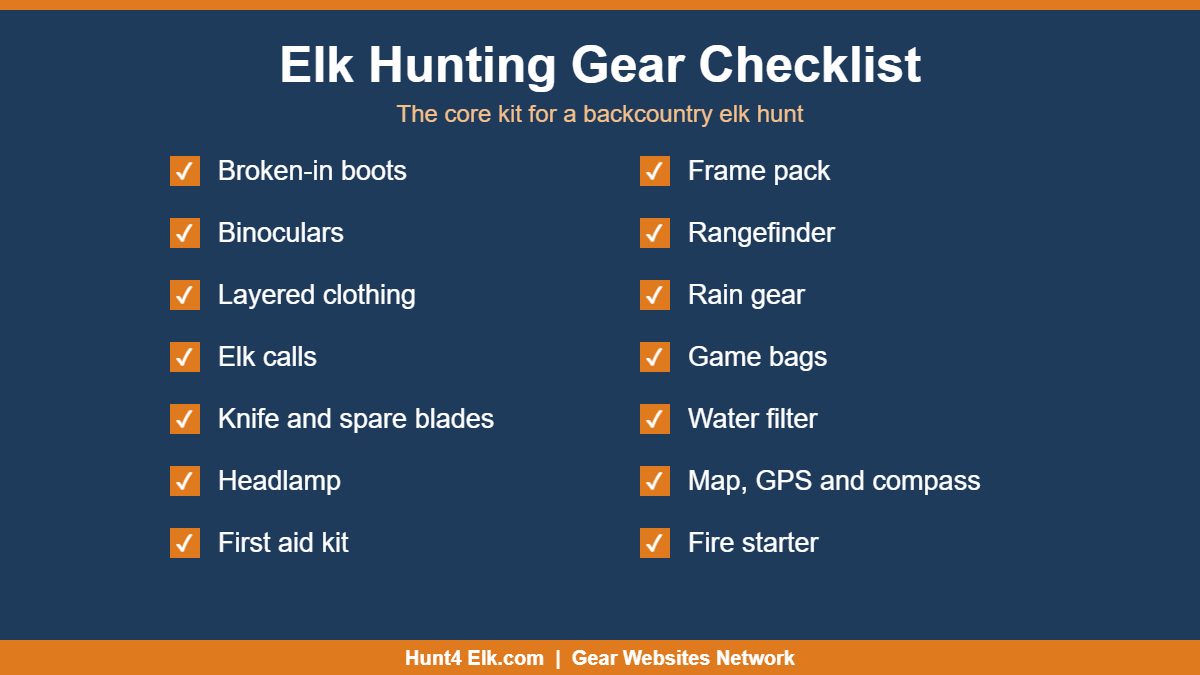
Elk hunting is hard on gear. Steep country, long days, cold mornings and heavy loads find every weak point. This guide covers what to look for in each piece of the kit, in the order it matters most.
Boots
Boots come first, because a hunt ends early when feet fail. Look for a stiff, supportive mountain boot that holds an edge on side hills, with a waterproof liner and an aggressive sole. Insulated boots suit late seasons; uninsulated boots suit September. Break them in with miles of hiking long before opening day.
Frame pack
A frame pack carries camp in and meat out. Look for a frame and suspension rated for heavy loads, a bag that can be cinched down for day hunts, and a way to carry quartered meat between the frame and the bag. Pack makers such as Mystery Ranch and Stone Glacier build frames specifically for hauling elk.
Optics
- Binoculars: most elk are found by glassing. A quality 8x or 10x binocular used from a tripod or chest harness finds more elk than more hiking.
- Rangefinder: distances are hard to judge in open country and across canyons. Know the range before the shot.
- Spotting scope: useful in open country to size up a bull before committing to a long stalk.
Clothing layers
Elk country can swing from frost at dawn to heat by noon. A layering system works better than one heavy coat: a base layer that wicks sweat, an insulating mid layer, a puffy jacket for glassing and a waterproof shell. Quiet fabrics matter for bowhunters working close to elk.
Calls
Carry a couple of diaphragm calls, an external cow call and a bugle tube. See Elk Calls and Calling for how to use each.
Meat care
- Game bags: breathable bags keep meat clean and let it cool.
- Knife and spare blades: breaking down an elk dulls a blade quickly.
- Paracord and a small tarp: for hanging meat in the shade and keeping it off the ground.
Navigation and safety
- A map, compass and GPS or phone mapping app with public and private land boundaries
- A headlamp with spare batteries; many elk are packed out after dark
- A water filter, a first aid kit and a fire starter
- A way to call for help where there is no cell service
See Elk Gear Manufacturers for the brands behind this gear.